
 by
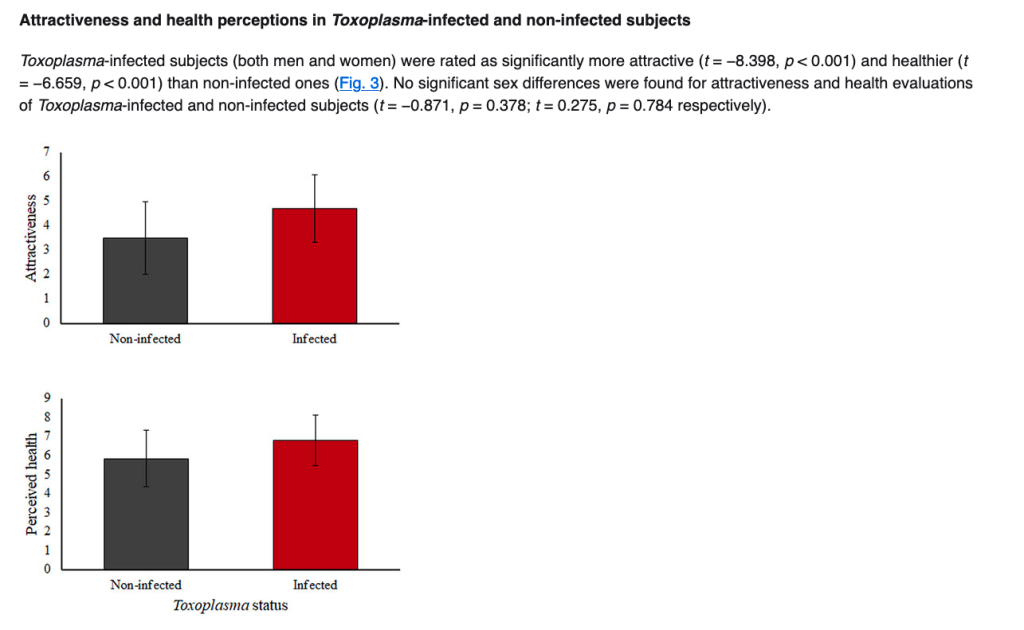
by Are Toxoplasma-infected subjects more attractive, symmetrical, or healthier than non-infected ones? Evidence from subjective and objective measurements
https://peerj.com/articles/13122
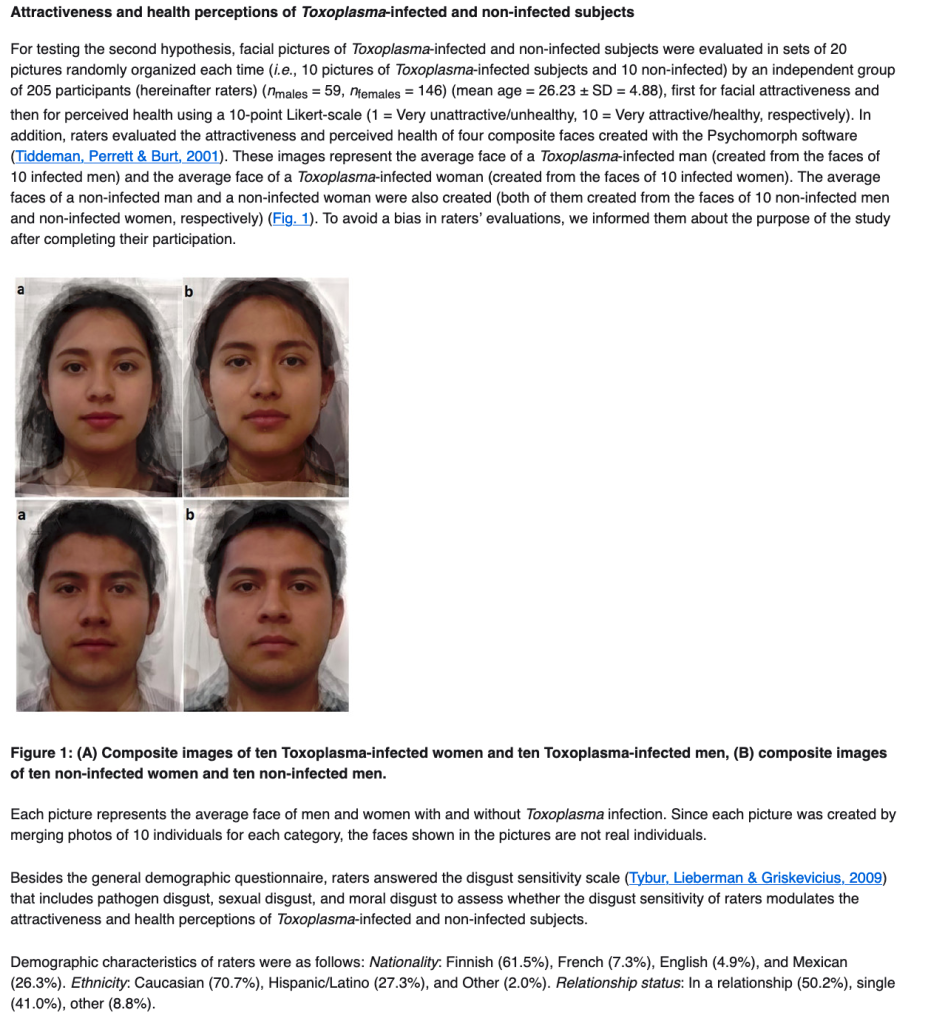
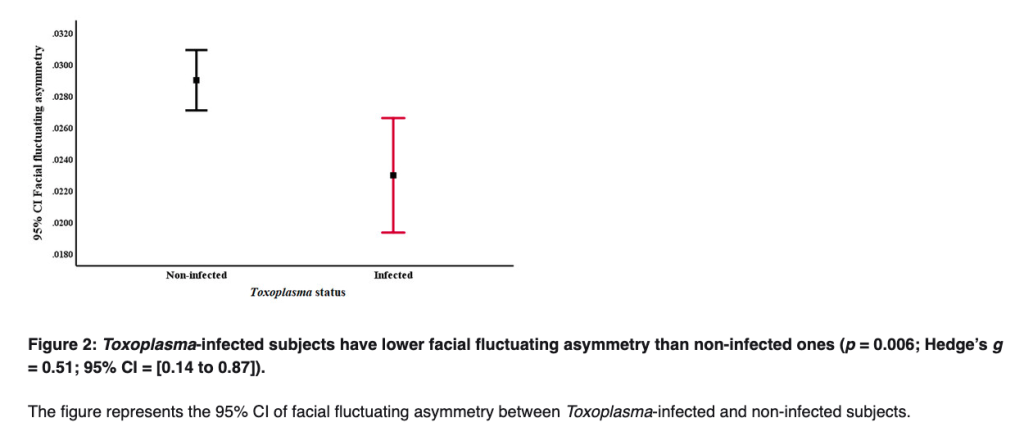
The ability of parasites to hijack the nervous system, manipulating the host’s physiology and behavior in ways that enhance the parasite’s fitness while damaging host fitness, is a topic of ongoing research interest in evolutionary biology, but is largely overlooked in mental health research. Nevertheless, recent evidence has shown that Toxoplasma gondii infection can change host testosterone levels and influence the development of some psychiatric disorders. Here, we tested this hypothesis in a mixed sample of 213 non-clinical subjects.
ConclusionsFramed in an evolutionary framework, the findings suggest that the elevated testosterone levels and the expression of psychopathological symptoms can be seen as the result of the manipulation exerted by Toxoplasma gondii either to reach its definitive host or to increase its spread. Future research can benefit from integrating insights from evolutionary biology and parasite-host interactions with physiology, immunology, and mental health to develop a better understanding of mental health etiology.
https://link.springer.com/article/10.1007/s40750-020-00160-2
—–
Aejd Note: Toxoplasma infection is detected using a blood test. Most people naturally get over their sickness, but the parasite remains dormant in the person. There are no normal treatments to completely rid a person of the parasite. There are regimens for infants infected prenatally that work well. People with weakened immune systems can receive regimens to keep the infection at bay.
